It started with a van full of tools
In September 2017, Michael bought a 1996 Ford E-350 Econoline at an estate sale. Its previous owner, a handyman, had passed away. The van came full of tools.
The purchase price was $3,000. Michael sold some of the tools for about $1,500 and kept others for personal use. After those sales, the effective vehicle acquisition cost was roughly $1,500.
What that $1,500 means
That figure describes the vehicle purchase after the tool-sale proceeds. It does not include conversion materials, repairs, registration, running costs or a value for the tools Michael kept.
Purchase and tool-sale amounts are Michael’s recollection. The complete build cost is still being reconstructed from records.
From blue to green
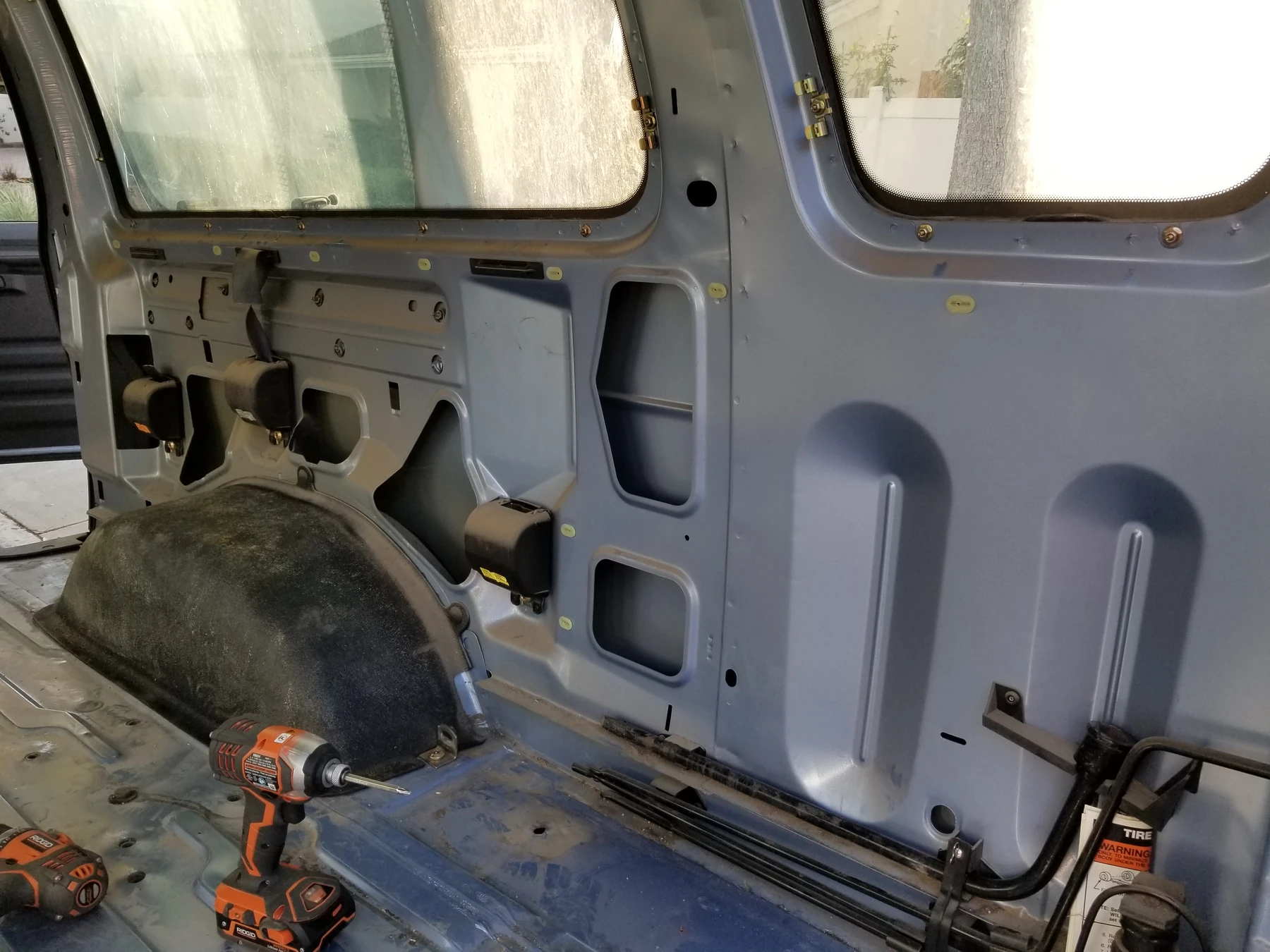
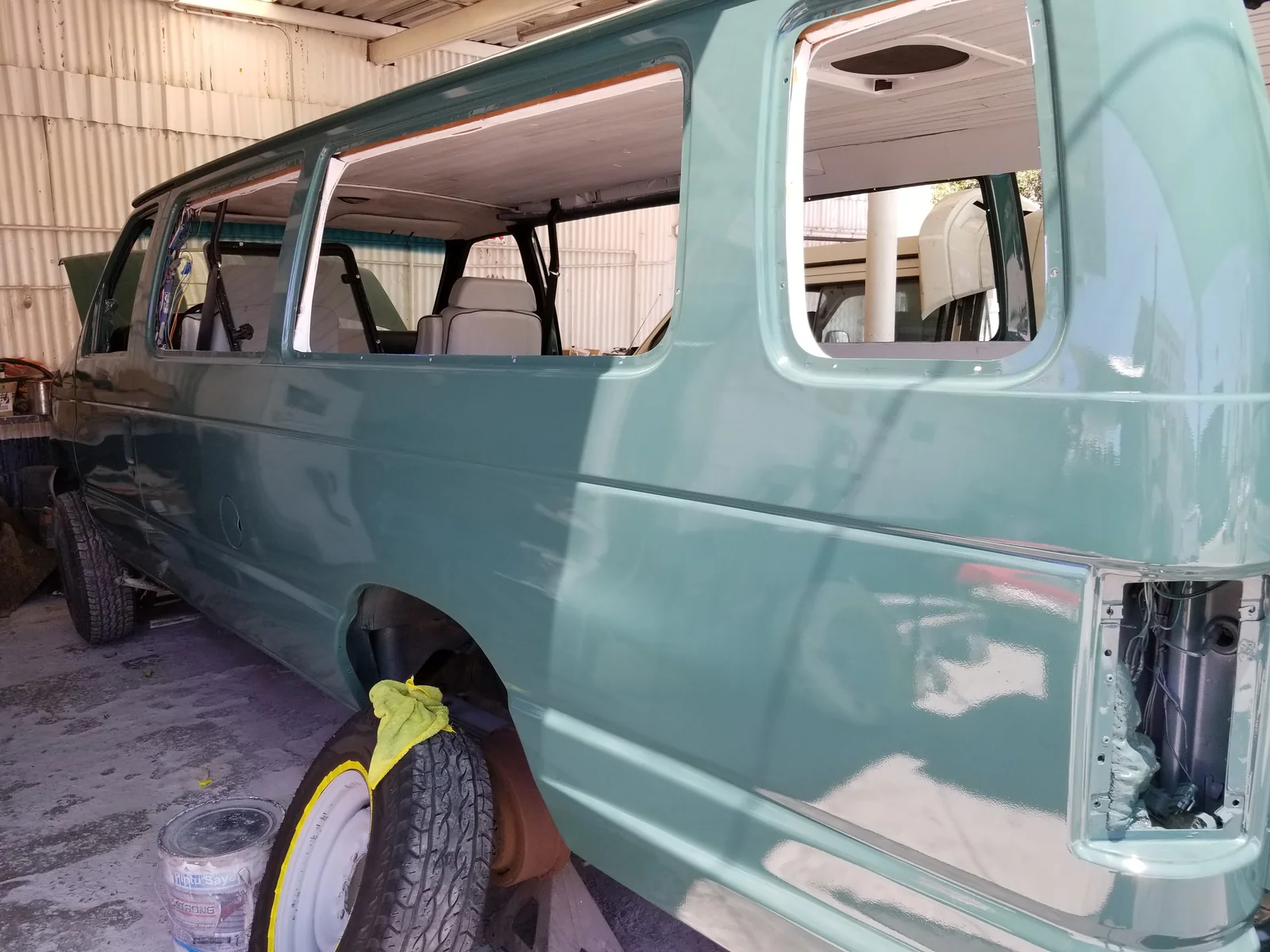
The early photographs show the blue passenger van. Walter’s bodywork and repaint took place at Los Panchos in Tijuana in summer 2019. The photo record spans late June into July.
The surviving repair order groups bodywork, paint, coatings, trim and window work into one package. It does not itemize a separate paint-only price.
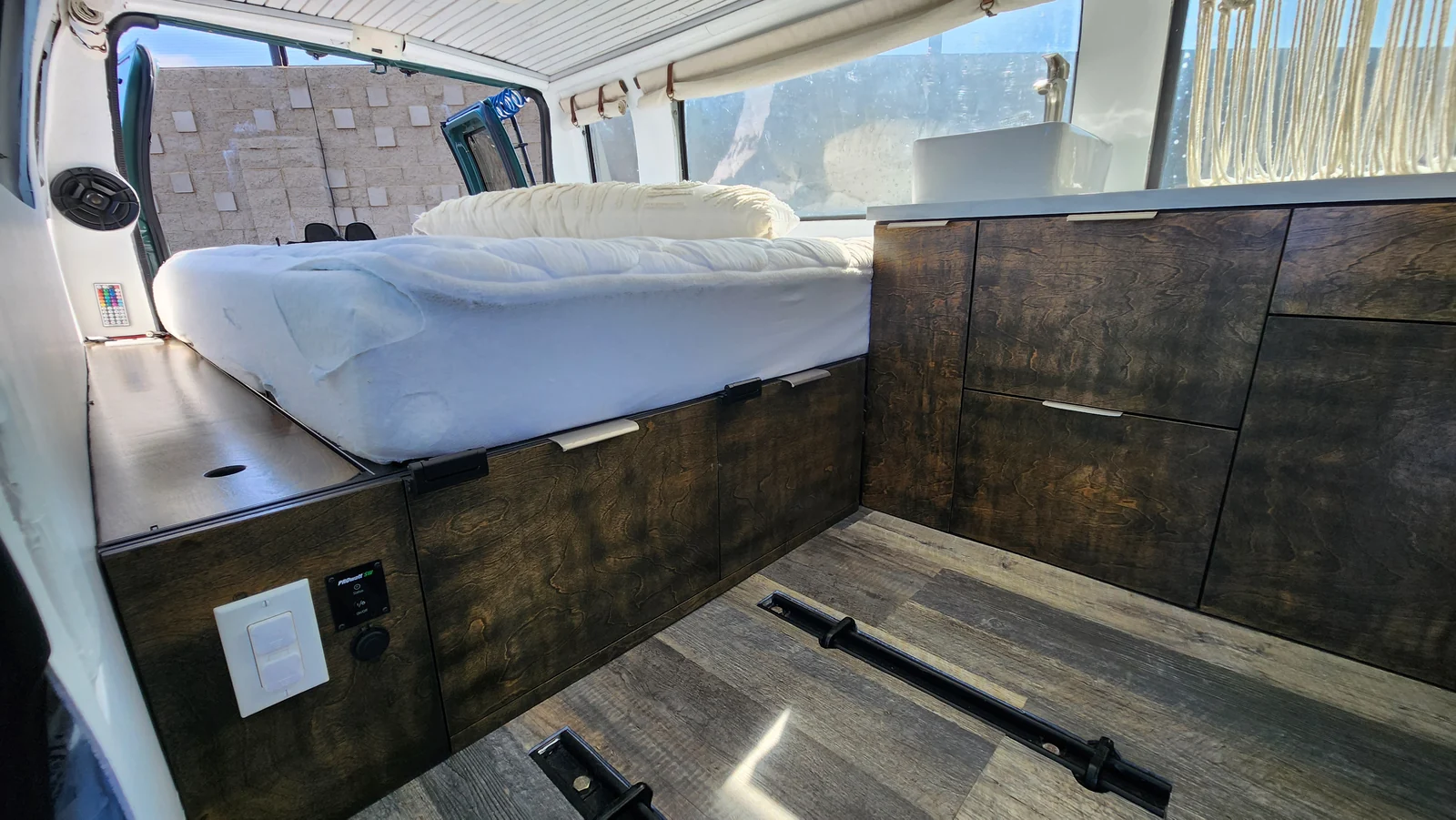
The later photographs show the green camper with its roof rack, solar panels, awning and finished living space. The conversion brings a bed, kitchen, storage, water and electrical systems into the same compact shell.
The details are the story
Walter’s build is documented in photographs and handwritten engineering notes. A pull-out cooler, accessible under-bed drawers and a custom kitchen frame show how much work sits behind a small finished space.
This journal follows the real build: the choices that can be documented, the parts that can be identified and the lessons Michael can verify. The photographs remain the starting point.
Take a look inside WalterAbout these notes
Based on Michael’s account, Walter’s finished-build and maintenance record, and original photographs. These chapters separate documented observations from construction instructions that still need verification.